09شرح النظم الصغير في أصول الفقه - نظم وشرح/ عامر بهجت
0:08
Subscribe to the channel.
اشتركوا في القناة
0:32
Yes, he said.
نعم قال
0:35
The versifier says: What is narrated from the Chosen One’s Sunnah—word, deed, and tacit approval—is Sunnah. This explains the categories of Sunnah by its content, which we covered in the previous lesson.
الناظم وما روي من سنة المختار قول وفعل سنة الإقرار هذا بيان لأقسام السنة باعتبار المتن والذي سبق في الدرس الماضي
0:46
The categories of Sunnah by its chain of transmission are mutawatir and ahad. This is by its content.
بيان لأقسام السنة باعتبار السند متواتر وأحد هذا باعتبار المتن
0:53
The content of a hadith may be a statement made by the Prophet, peace and blessings be upon him, such as his saying:
متن الحديث إما أن يكون قولا قاله النبي صلى الله عليه وسلم كقوله عليه الصلاة والسلام
1:00
“Allah does not accept the prayer of any of you if he has broken his ablution until he performs ablution.”
لا يقبل الله صلاة أحدكم إذا أحدث حتى يتوضى
1:04
It may also be an action. When the Prophet, peace and blessings be upon him, began the prayer with the opening takbir, he would raise his hands.
وقد يكون فعلا كان النبي صلى الله عليه وسلم إذا كبر للحرام يرفع يديه
1:12
Or it may be tacit approval: the Prophet, peace and blessings be upon him, heard one of the Companions say, for example,
وقد يكون إقرارا النبي صلى الله عليه وسلم سمع بعض الصحابة يخبر مثلا
1:20
that Ibn Sayyad was the Dajjal, and he did not object.
أن ابن الصائد هو الدجال فلم ينكر عليه
1:25
That’s something good. He said: What is narrated from the Chosen One’s Sunnah—
ما شيء طيب قال والناروي من سنة المختاري
1:28
word and deed; tacit approval is Sunnah. And if his action was devotional, it is obligatory.
قول وفعل سنة الإقرار وفعله إن كان لعباده واجون
1:38
Okay, first we said: statements, actions, and tacit approval. The versifier left out statements and moved on to actions.
طيب إحنا أول شيء قلنا القول والفعل والإقرار الناظم ترك القول ومضى إلى الفعل
1:46
He did not explain what statements indicate. Why? Because the implications of the Prophet’s statements, peace and blessings be upon him, are no different in their discussions from those of the words of God Almighty.
ولم يبين دلالة القول ليش لأن دلالة قول النبي صلى الله عليه وسلم لا تختلف في مباحثها عن دلالة قول الله عز وجل
1:56
So I placed it under the discussion of indications, since verbal indications are not among the topics of the Sunnah.
فجعلت في مبحث الدلالات فدلالات اللفظ ليست من مباحث السنة
2:01
Rather, they are a shared topic between the Quran and Sunnah. As for actions, the Prophet’s actions, peace and blessings be upon him, can be used as evidence.
بل هي من المباحث المشتركة بين الكتاب والسنة أما الفعل فإن فعل النبي صلى الله عليه وسلم يحتج به
2:08
But God’s actions cannot be used as evidence. Can we cite God’s actions as proof? No. He is not questioned about what He does.
وأما فعل الله فلا يحتج به هل يصح الاحتجاج بفعل الله لا يصح لا يسأل عما يفعل
2:15
God Almighty swore by some of His creations. Can we argue that because God swore, it is permissible for a created being to swear? No.
الله عز وجل أقسم ببعض مخلوقاته هل لنا أن نحتج بأن الله قد أقسم على جواز القسم للمخلوق لا
2:23
Clear? Yes. Okay, so we have the Prophet’s action—peace and blessings be upon him—
واضح نعم طيب فعندنا قال فعل النبي صلى الله عليه وسلم على أقسم
2:29
a devotional action he performed as worship. He says: If his action was devotional, it is obligatory.
فعل عبادي فعله تعبدا قال وفعله إن كان للعبادة فواجب
2:36
This is a well-known point of disagreement among scholars of legal theory. Al-Mukhtasar and al-Tahrir, along with the Hanbalis and many Malikis, hold that the Prophet’s action indicates obligation in worship.
وهذا محل خلاف مشهور بين الأصولين المختصر التحرير واعتمده الحنابلة وكثير من المالكية أن فعل النبي صلى الله عليه وسلم يدل على الوجوء في العبادة
2:48
For example, the Prophet, peace and blessings be upon him, used to deliver sermons standing.
مثال ذلك كان النبي صلى الله عليه وسلم يخطب قائما
2:54
Does this indicate that it is obligatory? God Almighty says, “and they left you standing.”
هل هذا يدل والله عز وجل يقول وتركوك قائما
2:58
Does this indicate that standing during the sermon is obligatory? The Malikis say yes, it is obligatory.
هل هذا يدل على وجوب القيام في الخطبة المالكية يقول النعم واجب
3:05
The Shafi‘is and a group of scholars said it is obligatory. Some scholars said it is not obligatory.
والشافعية وجمع من أهل العلم قالوا واجب قال بعض العلماء ليس بواجب
3:11
If he delivers the sermon sitting down, that is permissible. They cited the actions of some Companions as evidence.
لو خطب جالسا فإنه يجوز واستدلوا يضم بفعل بعض الصحاب
3:16
One reason for disagreement on this issue is disagreement over whether the Prophet’s actions
من أسباب الخلاف في هذه المسألة الخلاف في كون الفعل النبوي
3:22
indicate obligation or recommendation. Our school holds that the Prophet’s actions, peace be upon him, indicate obligation.
دالا على الوجوب أو على الاستحباب ومذهبنا أن فعل النبي صلى الله عليه وسلم يدل على الوجوب
3:29
And our school holds that standing during the sermon is not obligatory. That’s a contradiction.
ومذهبنا أن القيامة في الخطبة ليس بواجد تناقض
3:37
We have no choice but to submit to it—or is that not a contradiction? The Hanbalis say the default ruling for a prophetic action is that it is obligatory.
ما لنا إلا السقوث له ولا ما هو تناقض الحنابلة يقولون الأصل في فعل نبوي أنه على الوجوب
3:45
When it came to the issue of delivering the sermon seated, the majority said it was obligatory. The Hanbalis said, “No, it isn’t obligatory.”
لما جاءت مسألة خطبة جالسا الجمهور قالوا واجب الحنابلة قالوا لا ما هو واجب
3:52
Some students of knowledge come along and, so to speak, climb to a difficult position
يأتي بعض طلاب العلم يعني يركبوا يرتقي مرتقا
3:58
they’re not qualified for. He says, “Brother, there’s an obvious contradiction among scholars between principles and subsidiary rulings. They lay down rules, yet don’t abide by them.” We hear this in gatherings.
صعبا ليس أهلا له يقول يا أخي هناك تناقض واضح عند أهل العلم بين الأصول والفروع فهم يقعدون قوادع عد ولا يلتزمون بها نسمع هذا المجالس
4:09
As if he’d discovered the atom—or made some great discovery.
على أساس أنه اكتشف الزرة ولا اكتشف الاكتشاف عظيم
4:16
We say that jurisprudence isn’t mathematics: you don’t take a rule and apply it to every subsidiary case. The Hanbalis consider a Companion’s action authoritative, right?
نقول ليس الفقه هو رياضيات تأخذ القاعدة وترميها على الفروع الحنابلة عندهم فعل الصحابي حجة صح
4:25
It was reported from Muawiyah, may God be pleased with him—or Uthman, I forget now. I think, by God, it was Muawiyah who delivered the sermon seated.
ورد عن معاوية رضي الله عنه أو عثمان نسيت الآن وأظن معاوية والله أنه خطب جالسا
4:32
Right. For us, a Companion’s action is authoritative, so we interpreted the action as not indicating obligation. The discussion concerns an unqualified action; but if there is a textual report, we act on it and don’t disregard it.
صح عندنا فعل الصحابي حجة فصرفنا الفعل عن وجود ومحل البحث في الفعل المجرد أما إذا وجدت القراءة نعمل فيها ولا نتركها
4:43
We do, yes. It’s clear, Sheikh. So, if the Prophet’s action, peace be upon him, is an act of worship, it is obligatory.
نعمل يا واضح شيخ إذن فعل النبي صلى الله عليه وسلم إن كان للعبادة فهو واجب
4:50
And whatever the Prophet, peace be upon him, did as a customary practice is permissible. He said, “And permissible is what is customary.”
وما فعله النبي صلى الله عليه وسلم عادة فإنه جائز قال وجاذ ما للعادة
4:58
For example, the Prophet, peace be upon him, used to wear a turban.
مثال ذلك أن النبي صلى الله عليه وسلم كان يلبس العمامة
Only the first 5 minutes are free. Install the app or extension to keep watching.
Download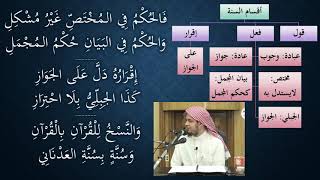

Request another language