10شرح النظم الصغير في أصول الفقه - نظم وشرح/ عامر بهجت
0:10
Subscribe to the channel.
اشتركوا في القناة
0:30
Or he may have done it as a customary practice, in which case it is permissible. He said: What is customary is permissible.
وإما أن يكون عادة فعله على وجه العادة فإنه جائز قال وجاز ما للعادة
0:37
Or he did it as an act specific to him, or as an explanation of something ambiguous. What is its ruling? This is what we’ll cover in this lesson. May God reward you; thank you.
أو فعله فعلا مختصا به أو بيانا لمجمد فما حكمه هذا الذي نأخذ في هذا الدرس استحبه بالله شكرا
0:44
The ruling on what is specific to him is clear.
الحكم في المختص غيث
0:47
And the ruling on clarification of the ambiguous, he said...
الشهر وحكم في البيان في المجمع وقال
0:50
...a distinction, like the camel, and to avoid taking from the Qur’an and the Sunnah of the Prophet. All right, the actions of the Prophet, peace and blessings be upon him...
بلد على الجراز كالجملي والاحتراز من أسر القرآن والقرآن المسنة بسنة العدنان طيب فعل النبي صلى الله عليه وسلم
1:02
If it is for worship, it is obligatory; if customary, it is permissible. If he did it and it was specific to him, he said: The ruling on what is specific to him is not difficult.
أما أن يكون للعبادة فواجب أو للعادة فواجهة أو فعله وكان مختصا به قال فالحكم في المختص غير مشكل
1:11
Because its ruling is known from its name: something specific. So the community is bound by it, and it is not exclusive to him.
لأنه قد عرف حكمه من اسمه اسم مختص إذن تقتل الأمة فيه ولا خاص به
1:18
Specific to him. He said: The ruling on what is specific to him is not difficult. What we need is what was specific to him, peace and blessings be upon him.
خاص به قال فالحكم في المختص غير مشكل ما نحتاجه هو مختص به صلى الله عليه وسلم
1:25
All right, as for clarification, what the Prophet, peace and blessings be upon him, did to explain something ambiguous...
طيب والحكم للبيان ما فعله النبي صلى الله عليه وسلم بيانا لمجملي
1:31
Its ruling is the ruling of what it clarifies. He said: The ruling on clarification is the ruling of what it clarifies. So, for example, if we are given a command...
فحكمه حكم المجملي قال والحكم في البياني حكم المجملي فإذا جاءنا أمرا مثلا
1:38
God Almighty said, “Establish prayer,” and the Prophet, peace and blessings be upon him, said, “Five prayers...”
قال الله عز وجل وأقيم الصلاة وقال صلى الله عليه وسلم خمس صلوات
1:44
...has God prescribed for His servants. Then the Prophet, peace and blessings be upon him, clarified through his actions...
فرضاهن الله على العباد ثم بين النبي صلى الله عليه وسلم بفعله
1:51
...and prayed the noon prayer as four units. What is the ruling on the noon prayer being four units?
وصلى الظهر أربع ركعات ما حكم كون الظهر أربع ركعات
1:59
It is obligatory, because he clarified the ambiguous wording. The command “Establish prayer” is ambiguous regarding the number of units.
واجب لأنه أبان به عن المجمل فإن قوله أقيم الصلاة مجمل في عدد الركعات واضح
2:07
He said: The ruling on clarification is the ruling of what it clarifies. So we have the clarified matter: prayer is obligatory. Therefore, what he clarified is obligatory, and the ruling on clarification is the ruling of what it clarifies.
قال والحكم في البيان حكم المجملي فصار عندنا المبين الصلاة واجبة إذن ما بينها فهو واجب والحكم في البيان حكم المجملي
2:19
Now, pay attention. All right, let me ask you a question before I explain. Let me ask you first.
وهنا ننتبه طيب أسألك السؤال قبل أن أنبه خليني أسألك السؤال
2:26
The Prophet, peace and blessings be upon him...
النبي صلى الله عليه وسلم
2:30
When he performed ablution, he ran his fingers through his beard. Of course, there is discussion about whether this hadith is authentic.
لما توضى كان يخلل لحيته طبعا في بحث في أن هذا الحديث صحيح أو لا
2:37
Although there is consensus that combing water through the beard is recommended, it is reported that when the Prophet (peace be upon him) performed ablution, he combed water through his beard.
مع الإجماع على استحباب تخليل لحيته لكن ورد كان صلى الله عليه وسلم إذا توضأ خلل لحيته
2:46
What is the ruling on running one’s fingers through the beard? Do we say it is obligatory?
ما حكم تخليل اللحيته هل نقول يجب
2:52
Because it clarifies God Almighty’s words: “O you who believe, when you rise for prayer, wash your faces...”
لأنه بيان لقول الله عز وجل يا أيها الذين آمنوا إذا قمتم للصلاف فاغسلوا وجوهكم
3:00
What do you say? The ambiguous wording has a ruling, and clarification has a ruling—and what about the face?
ماذا تقولون والمجمل حكم وحكم البيان حكم وحكم الوجه
3:08
Is the face even ambiguous? Is the face ambiguous or not?
هل الوجه مجمل أصلا الوجه مجمل ليس بمجمل
3:14
So the Prophet’s action is something additional to washing the face itself.
ففعل النبي صلى الله عليه وسلم هو زائد عن غسل الوجه أصلا
3:18
Some people make a mistake: they take every hadith related to a verse and treat them all as making something obligatory, just as God commanded washing the face.
يخطئ بعض الناس فيأتي إلى كل الأحاديث المتعلقة بآية فيجعلها كلها على وجوب كما قل لله أن الله أمر بغسل الوجه
3:26
We say this is not an ambiguous matter. This is an additional act the Prophet, peace and blessings be upon him, performed.
نقول هذا ليس بمجمل فهذا أمر زائد فعله النبي صلى الله عليه وسلم
3:31
In addition to washing the face, the Prophet, peace and blessings be upon him.
على غسل الوجه النبي صلى الله عليه وسلم
3:37
He said, “The night prayer is two by two,” and he did not pray more than eleven rak‘ahs in Ramadan or at any other time.
قال صلاة الليل مثنى مثنى وما زاد في رمضان ولا في غيره عن 11 ركعة
3:46
So do we say he did this to clarify something ambiguous? No, because “two by two” is not ambiguous; it is unrestricted and indicates that any number of night prayers is permissible. Clear?
فهل نقول هذا فعله بيانا للمجمل لا لأن مثنى مثنى ليس بمجمل بل هو مطلق يدل على جواز أي عدد في صلاة الليل واضح
3:56
All right, he said, may God have mercy on him: “The ruling on what is specific is not problematic, and the ruling on clarification is the ruling on what is clarified.” Then he moved on to the indication of tacit approval.
طيب قال رحمه الله تعالى فالحكم في المختص غير مشكلة والحكم في البيان حكم المجمل ثم انتقل إلى دلالة الإقرار
4:06
He said that his approval indicates permissibility, and likewise innate actions, without qualification.
قال إقراره دل على الجواز كذل جبلي بلا احتراز
4:09
Let’s discuss innate actions first, since they are connected to deeds, while the other matter is approval. He said innate actions indicate permissibility without qualification.
خلنا نقدم الجبلي باعتبار أن الجبلي تابع للفعل وذاك إقرار قال الجبلي يدل على الجواز بلا احتراز
4:18
Scholars call the phrase “without qualification” a poetic filler in verse.
وكلمة بلا احتراز يسميها العلماء في النظم حشو
4:24
Meaning, there was space left in the line, so he filled it with a word.
يعني باقي فراغ في البيت فكمله بلفظ
4:30
But the best filler is one that contributes to the meaning.
ولكن أحسن الحشوي ما كان مفيدا للمعنى
4:34
It reinforces the meaning or adds something intended to it. So although “without qualification” is filler,
يؤكد معنى أو يضيف إلى المعنى شيئا مرادا فقوله بلا احتراز وإن كان حشوا
4:41
it is useful filler: it points out that this is a matter of consensus, so there is no qualification here, because scholars have differed about customary actions. Some say customary actions are to be followed.
لكنه حشو مفيد فهو إشارة إلى أن هذه المسألة مسألة إجماعية فلا احتراز فيها لأن العلماء قد اختلفوا في العادي بعضهم قال العادي يقتدى به فيه
4:53
As for innate actions, there is consensus that they do not indicate permissibility. The Prophet, peace and blessings be upon him, used to…
أما الجبل بالإجماع أنه لا يدل على الجواز كان صلى الله عليه وسلم
4:58
His favorite food and drink were sweet, cold things—sweet and cold.
أحب الطعام أحب الشراب إليه الحلو البارد والحلو البارد
Only the first 5 minutes are free. Install the app or extension to keep watching.
Download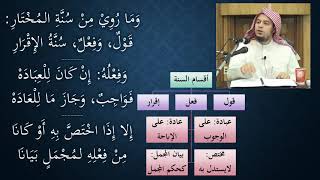

Request another language