Bancolombia | Primer viaje: Herencia Española. De Colombia Pa’l mundo
0:00
What do you think, Tomasa, could be the food that represents Colombians around the world? Coffee, huh? You know?
¿Cuál crees tú, Tomasa, que pueda ser ese alimento que representan los colombianos en el mundo entero? Café, ¿eh? ¿Tú sabes?
0:06
It’s definitely bandeja paisa. Could there be one food that represents all of us as Colombians around the world?
Es una bandeja paisa definitivamente. ¿Habrá un único alimento que pueda representarnos a todos como colombianos en el mundo?
0:13
When we talk about Mexican food, tacos. Spanish, paella. Do we have something like that in Colombia?
Cuando hablamos de cocina mexicana, tacos. Española, paella. ¿Tendremos eso en Colombia?
0:19
This is De Colombia Pa’l Mundo.
Esto es De Colombia Pa'l Mundo.
0:25
Did you know many foods we think are from here arrived by ship over 400 years ago?
¿Sabían que muchos alimentos que pensamos que son de acá llegaron en barco hace más de 400 años?
0:31
Would you believe me if I told you rice, carrots, onions, lemons, and even coffee came from Europe?
¿Me creerían si les digo que el arroz, la zanahoria, la cebolla, el limón y hasta el café viene de Europa?
0:36
The ingredients and cooking methods that came with the Spanish gave us the chance to experiment.
Los productos y las formas de cocinar que llegaron con los españoles nos dieron la oportunidad de experimentar.
0:42
That’s how Colombia’s flavors began to take shape, like lechona.
Así empezó a formarse el sabor de Colombia, como la lechona.
0:46
You know how happy I am to be here in Ibagué, at the market, asking you about one of the most iconic dishes: this wonderful lechona.
Tú sabes la alegría que me da estar aquí en Ibagué, en la Plaza de Mercado, preguntándote sobre uno de los platos más icónicos, que es esta maravillosa lechona.
0:54
Where do you think this dish comes from? It’s Spanish heritage. Because of Spanish suckling pig? Yes, sir. I imagine so. How do you make lechona?
¿De dónde crees que venga este plato? Esto es herencia española. ¿Por el cochinillo español? Sí, señor. Me imagino. ¿Cómo se hace una lechona?
1:00
It’s stuffed with peas, a little stew, and meat. Watching all this lechona being served has made me hungry. Crispy.
Que rellena con arvejas, con guisito y carne. Estoy antojado de tanto ver servir lechona. Crujiente.
1:08
Could you take me to the person who supplies you with pork? It’s not a man, it’s a woman. Her name is Lucía. The women are in charge here.
¿Me podrías llevar donde el hombre que te distribuye el cerdo? No es hombre, es mujer, se llama Lucía. Acá mandamos las mujeres.
1:14
You see, most of us working in this market are women—in the meat shops, restaurants, and produce stalls.
Mire que esta plaza la mayoría de las somos mujeres trabajadores. En los negocios tanto de carne, de restaurantes, de verdura.
1:21
What dish do you think makes people say, “Ah, Colombia!”? Bread? Tamal with lechona.
¿Cuál crees tú que sea ese plato que la gente diga, ah, Colombia, pan? El tamal con lechona.
1:27
Does lechona have rice or not? It doesn’t have rice.
¿La lechona lleva arroz o no lleva arroz? No lleva arroz.
1:29
Tolima was one of the first places where people started making lechona.
Porque en el Tolima fue en las primeras partes donde se empezó a hacer la lechona.
1:35
Since Tolima is a rice-growing region, it’s strange that lechona doesn’t have rice.
Siendo el Tolima una tierra de cultivo de arroz, muy raro que la lechona no lleve arroz.
1:41
Because tamales are the ones that have rice. Tolima-style tamales are made entirely with rice.
porque los tamales son los que llevan arroz. El tamal tolimense es a base de puro arroz.
1:46
Some Colombians think a meal is incomplete without rice.
Algunos colombianos piensan que si no hay arroz, la comida está incompleta.
1:50
And what better way to talk about heritage than to visit a rice farm that’s been passed down through generations?
¿Y qué mejor forma de hablar de herencia que visitando un cultivo de arroz que ha vivido de generación en generación?
1:56
We’re a country that grows a lot of rice, but we don’t know much about it. There are every variety of rice you can imagine.
Siendo un país muy arrocero, no sabemos de arroz. En arroz hay todas las variedades de arroz que te quieras imaginar.
2:03
We were the first to harvest and mill rice, and bring a rice brand with a designation of origin to the Colombian market.
Y fuimos los primeros que cogimos arroz, trillamos arroz y sacamos marca con denominación de origen al mercado colombiano.
2:12
We’ve been growing rice here on this plateau in Ibagué for 60 or 70 years.
Aquí somos 60 o 70 años sembrando arroz en esta meseta y bagué.
2:17
And their grandparents passed it on to their parents, and their parents to their children, and the children to this new generation, who must be taught to love the land.
Y sus abuelos se lo dejaron a sus papás y sus papás, a los hijos y los hijos, a esta otra nueva generación que hay que formarla amando la tierra.
2:26
And there’s something—there’s a saying, I swear it’s true, Guillo: the countryside is getting old.
Y hay una cosa, hay una frase que te lo juro que es real, Guillo, y es el campo se está quedando viejo.
2:32
The countryside is something you have to be passionate about. Rice came to stay on our tables. It goes with everything.
El campo es una cosa que si no es pasional no es. El arroz llegó a nuestras mesas para quedarse. Va con todo.
2:38
And of course, it goes with one of our most important dishes, sancocho. What do I have you doing? Waiting, Guillermo, for the cassava.
Y por supuesto va acompañando uno de nuestros platos más importantes, el sancocho. ¿Qué me pone a hacer a mí? Esperar, Guillermo, la yuca.
2:45
All right. You’re here to work, Guillermo. Perfect. I’m really curious to see how you make it, because your sancocho is famous around here.
Listo. Usted viene a trabajar, Guillermo. Perfecto. Estoy muy curioso de saber cómo hace, porque su sancocho es muy famoso aquí.
2:51
You know where sancocho comes from, right? No, Guillermo. There are lots of theories.
¿Usted sabe de dónde se origina el sancocho, no? No, Guillermo. Hay muchas teorías.
2:54
They say it’s related to Spanish cocido, but they also talk about ají acotaíno. How did you end up in the kitchen, exhausted
Hablan que es el cocido español, pero también hablan de el ají acotaíno como terminó usted en la cocina agotada
3:02
exhausted but she carries
agotada pero lleva
3:05
40 years, actually I start here because
40 años en sí yo empiezo acá por
3:08
my husband's mother bought this place many years ago, and she was the one who taught me. Well, that's it, we're not going to serve it. You eat this, and I'll eat that.
la mamá de mi esposo ella compró este local hace muchos años y ella fue la que me enseñó bueno ya está no vamos a servirlo este se lo Lo come usted y yo me como eso.
3:23
Do you think sancocho could be the dish that represents us? It could be. After this sancocho, nothing beats a good cup of coffee.
¿Usted cree que el sancocho podría ser ese plato que nos represente? Puede ser. Después de este sancocho, nada mejor que un buen tinto.
3:29
It’s time to head to the fields where they grow what’s considered one of the best products in the world. Do you drink coffee with sugar or without? No, that’s sacrilege.
Es hora de irnos hasta los cultivos del que es considerado uno de los mejores productos del mundo. ¿El café se toma con azúcar o sin azúcar? No, eso es un sacrilegio.
3:38
If we add sugar, all the work we did on the farm goes completely to waste.
Si le ponemos azúcar, todo el proceso que nosotros hicimos en la finca queda completamente perdido, desperdiciado.
3:46
History says coffee came from Spain. It was our land and our farmers who made it a symbol of progress.
La historia dice que el café vino de España. Fueron nuestras tierras y nuestros campesinos los que lo hicieron un símbolo de progreso.
3:51
I get the impression that young people are leaving the countryside.
A mí me da la impresión que los jóvenes se están yendo del campo.
3:55
Colombia’s countryside needs to be a place for technology, innovation, and knowledge, so young people will stay.
El campo de Colombia tiene que ser ese espacio de tecnología, de innovación, de conocimiento para hacer que los jóvenes nos quedemos.
4:03
I’m the fourth generation of coffee growers in my family. I have
Yo soy la cuarta generación de caficultores de mi familia. Tengo
4:06
an association of women coffee growers that’s part of an international network of women in coffee. It’s exciting because it connects us with the world.
una asociación de mujeres cafeteras que hace parte de una red internacional de otras mujeres en café, donde es algo que nos emociona porque es conectar con el mundo.
4:16
A woman coffee grower in Ethiopia may face the same challenges as I do here in Quindío, Colombia.
Una mujer caficultora en Etiopía puede tener los mismos retos que yo aquí en el Quindío en Colombia
4:23
Alone, we may get there faster, but together, we get farther.
muchas veces solas llegamos más rápido pero juntas llegamos más lejos
4:26
We’re traveling all over the country, looking for a
estamos viajando por todo el país buscando un
4:30
dish that can identify us as Colombians around the world. Arepas are everywhere. I think they fit the bill, but then let’s make the arepa with coffee and milk.
plato que nos pueda identificar en el mundo como colombianos hay arepa en todas partes yo creo que se ajusta mucho a eso pero entonces vamos a hacer que la arepa sea con café con leche
4:41
The Spanish arepa undoubtedly left its mark on our tables and our agriculture.
la arepa española marcó sin duda nuestras mesas y nuestro agro
4:44
But on this journey, I’ve realized it wasn’t just what the Spanish brought, but what we did with it.
pero en este viaje me he dado cuenta que no solamente fue lo que trajeron los españoles, sino lo que nosotros hicimos con eso.
4:51
And we have people who work tirelessly, from the heart. Could that be the Spanish legacy that Colombia shares with the world?
Y tenemos personas que trabajan sin parar, desde el corazón. ¿Será que la herencia española estará eso de Colombia para el mundo?
4:58
Don’t miss the next episode as we keep looking for the dish that represents us all.
No se pierdan el siguiente capítulo para que sigamos buscando ese plato que nos representa a todos.
처음 5분까지만 무료로 볼 수 있어요. 이어서 보려면 앱이나 확장 프로그램을 설치하세요.
다운로드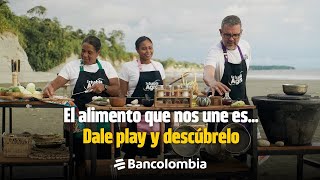



다른 언어로 요청하기