04شرح النظم الصغير في أصول الفقه - نظم وشرح/ عامر بهجت
0:08
Subscribe to the channel
اشتركوا في القناة
0:30
Related to the third category, and the fourth is the rulings of obligation.
المتعلق بالنوع الثالث تمام والرابع من الأحكام التكلفية الأحكام التكلفية
0:37
The rulings of obligation tell me what is obligatory and recommended; this is the side of commands.
الأحكام التكلفية قلني إيش واجب ومنذب هذا جانب المأمورات
0:46
We have the side of prohibitions. If the prohibition is emphatic, that is forbidden. He said: “The forbidden is that which is prohibited emphatically.”
عندنا جانب المنهيات إن كان النهي مع جزم فهذا هو التحريم قال أما الحرام فهو ما عنه نهي جزما ما نهي عنه نهيا جازما
0:56
So you are not allowed to do it. If you do, you sin. That is forbidden. If it is prohibited without emphasis,
بحيث لا يجوز لك أن تفعلهم فإن فعلته أثمت هذا الحرام وإن كان قد يهي عنه بغير جزم
1:03
then what is it? Disliked. If you do it, you do not sin or get punished. All right.
فهذا هو إيش المكروه فلو فعلته لا تأثم ولا تعاقب طيب
1:10
There are many examples of disliked acts among jurists. For example, among the disliked acts in prayer,
مثاله أمثلة المكروه كثيرة عند الفقهاء مثلا من مكرهات الصلاة على سبيل المثال من مكرهات الصلاة
1:18
cracking your knuckles, as long as you do not make too many slight movements during prayer.
فرقعة أصابعه إذا لم يكثر الحركة اليسيرة في الصلاة إذا لم تكثر
1:24
You do not sin for doing it, but you miss out on a reward. This is a non-emphatic prohibition, which means it is disliked.
فإنه لا يأثم بها لكنه فوت على نفسه أجرا بفعلها فهذا هو النهي غير الجازم فهو الكراهة
1:33
He said: “When it is not emphatic, doing it is disliked.” This is the disliked category, the third type.
قال ودون الجزم فعله كراهي وهذا هو المكره النوع الثالث
1:39
Or the third type according to the division: everything is either a command, a prohibition, or a choice.
أو النوع الثالث باعتبار التقسيم الكل إما مأمورات أو منهيات أو تخير
1:46
So, the choice here means permissibility, and permissibility is of two types.
فالتخير هذا هو الإباحة والإباحة نوعان
1:51
Some call them legal permissibility and rational permissibility, but in reality they are all legal.
يسميها بعضهم الإباحة الشرعية والإباحة العقلية ولكن كلها في الحقيقة شرعية
1:58
But some are established by a specific text from the Law. God Most High said: “God has permitted trade.”
لكن بعضها ثبت بخطاب خاص من الشرع قال الله تعالى وأحل الله البيع
2:05
The permissibility of trade is established by presumption of continuity—that is, there is no evidence prohibiting it, nor any specific evidence permitting it.
فالبيع جوازه ثابت بالاستصحاب يعني بأنه ما في دليل على التحريب ولا بوجود دليل على الإباحة
2:12
There is evidence for permissibility. The second kind is established by presumption, by default. He said: “And if choice occurs...”
بوجود دليل على الإباحة النوع الثاني ما يثبت بالاستصحاب بالأصل قال وإن أتى التخير
2:20
That is, a choice between doing something and leaving it. This is permissibility by default.
يعني التخير بين الفعل والترق فالإباحة فهذه هي الإباحة بالأصل
2:25
Meaning, without a specific text: Is wearing boots permissible, Sheikh?
يعني بدون خطاب هل يجوز لبس العقاب يا شيخ؟
2:29
It is permissible. What is the evidence that wearing them is permissible? The evidence is
يجوز ما الدليل على جواز لبسه؟ الدليل على جواز لبسه
2:35
the absence of evidence prohibiting them. You rely on the default; this is the principle of presumption of continuity.
عدم وجود دليل على تحريمه تمسك بالأصل هذا دليل الاستصحاب
2:41
It is one of the proofs of permissibility. The second is what is established by a text, such as God’s saying: “God has permitted trade.”
وهو من أدلة الإباحة تمام الثاني ما جاء النص به كقوله عز وجل وأحل الله البيع
2:49
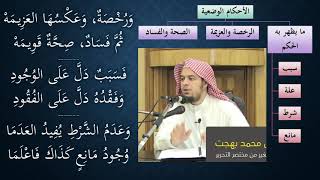
Then he moved on to declaratory rulings and said: “Declaratory rulings: one is the cause.”
ثم انتقل إلى الأحكام الوضعية فقال أحكام وضع واحد سبب
2:56
For example, the noon prayer: the cause of its being obligatory is the sun’s decline.
مثاله صلاة الظبر سبب وجوبها زوال الشمس
3:00
The second is the effective cause. The Prophet, peace be upon him, said: “A judge must not pass judgment while angry.”
الثاني العلة قال صلى الله عليه وسلم لا يقضي القاضي وهو غضبان
3:09
The prohibition on judging—the cause is anger or mental distraction. The third is the condition.
تحريم القضاء علته الغضب أو تشوش الدهن الثالث الشرط
3:16
Allah does not accept the prayer of any of you who has broken his ablution until he performs ablution. Purification is a condition for valid prayer.
لا يقبل الله صلاة أحدكم إذا أحدث حتى يتوضع الطهارة شرط لصحة الصلاة
3:22
Fourth: impediments, such as menstruation in relation to prayer.
الرابع الموانع تمام كالحيض بالنسبة للصلاة
3:29
Menstruation is one of the impediments that invalidate prayer.
الحيض موانع من الموانع المخلة بصحة الصلاة
3:34
This is the meaning of his words, “As for the forbidden, it is that which…” That concludes this lesson. And Allah knows best. May Allah bless and grant peace to our Prophet Muhammad, his family, and all his companions.
هذا معنى قوله أما الحرام فهو ما عنه نبض إلى آخر هذا الدرس والله أعلم وصلى الله وسلم على نبينا محمد وعلى آله وصحبه جميعا


다른 언어로 요청하기